Es diciembre de 2025. Si miramos por el retrovisor hace apenas tres años, el panorama tecnológico parece casi irreconocible. A finales de 2022 y durante todo 2023, el mundo vivió una luna de miel colectiva con la Inteligencia Artificial Generativa. Nos maravillamos con la capacidad de los modelos para escribir poesía, generar código básico y crear imágenes surrealistas. Las empresas se lanzaron a una carrera frenética de “pilotos de IA”, integrando chatbots en sus servicios de atención al cliente y herramientas de resumen en sus suites de oficina.
Sin embargo, al cerrar este año 2025, la conversación ha cambiado radicalmente. La fase de la novedad ha terminado; hemos entrado en la fase de la infraestructura crítica.
La IA ya no es esa herramienta curiosa en una pestaña del navegador; se ha convertido en el sistema nervioso central de la industria moderna. El impacto en los últimos años ha sido acumulativo, pero 2025 será recordado en los libros de historia tecnológica como el punto de inflexión: el año en que la IA dejó de simplemente hablar para empezar a actuar. El año en que la carrera de los Grandes Modelos de Lenguaje (LLM) evolucionó hacia la Era de los Agentes Autónomos.
El Camino a 2025: Superando el “Purgatorio de los Pilotos”
Para entender la magnitud de 2025, debemos contextualizar brevemente el periodo 2023-2024. Fueron años de explosión cámbrica en la oferta de modelos. Vimos la batalla de titanes entre OpenAI, Google y Anthropic, y el auge democratizador del código abierto con Llama y Mistral.
Las industrias pasaron estos años en lo que muchos CIOs llamaron el “purgatorio de los pilotos”. Se lanzaban cientos de pruebas de concepto (PoC), pero pocas lograban escalar a producción. Los obstáculos eran claros: las “alucinaciones” de los modelos eran inaceptables en entornos industriales críticos, la privacidad de los datos era una pesadilla logística y el coste computacional de ejecutar modelos gigantescos era prohibitivo para muchas aplicaciones.
La industria necesitaba algo más que un oráculo inteligente que respondiera preguntas; necesitaba trabajadores digitales fiables. Y eso es exactamente lo que 2025 entregó.
2025: La Definición del “Año del Agente”
Si la palabra de moda en 2023 fue “Prompt”, la de 2025 ha sido “Orquestación”.
Este año hemos presenciado el cambio tectónico de los LLM pasivos a los Agentes de IA Autónomos. Un LLM es como una enciclopedia increíblemente inteligente que espera tu pregunta. Un Agente, en cambio, es un sistema que utiliza esa enciclopedia para razonar, pero que además tiene permiso para usar herramientas, tomar decisiones secuenciales y ejecutar tareas en el mundo digital (y a veces físico) sin supervisión humana constante.

La carrera en 2025 no se trató de quién tenía el modelo con más billones de parámetros, sino de quién construía el ecosistema de agentes más capaz y seguro.
¿Qué cambió técnicamente en 2025?
- Razonamiento y Planificación Fiables: Los modelos de 2025 redujeron drásticamente las alucinaciones mediante técnicas avanzadas de “Retrieval-Augmented Generation” (RAG) y verificación cruzada. Ahora, los agentes pueden planificar tareas complejas de varios pasos (ej. “optimizar la cadena de suministro para el Q3”) y si encuentran un obstáculo, pueden replantear la estrategia en lugar de inventar datos.
- Uso de Herramientas (Tool Use) Estandarizado: Los agentes aprendieron a “leer los manuales” de otras APIs de software. Un agente industrial ahora puede entrar en el ERP (SAP, Oracle), cruzar datos con el CRM (Salesforce), y enviar órdenes de compra a proveedores, todo de forma autónoma tras recibir un objetivo de alto nivel.
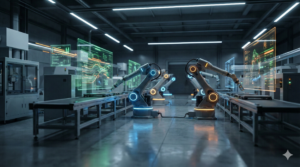
- Multimodalidad Nativa: En 2025, los modelos ya no solo procesan texto e imagen por separado. Un agente en una fábrica puede “ver” un vídeo en tiempo real de una línea de ensamblaje, detectar una anomalía acústica (“oír” un rodamiento defectuoso), leer los registros del sensor de temperatura y detener la máquina preventivamente.
Impacto Industrial Profundo: Casos de Uso en 2025
El impacto de esta transición hacia los agentes ha sido visceral en sectores clave. La eficiencia ya no se mide en minutos ahorrados al escribir un email, sino en puntos porcentuales de margen operativo.
Manufactura y Logística 4.0 (Realmente)
La promesa de la Industria 4.0 finally materialized. In 2025, leading factories implemented “Predictive Maintenance Agents” that don’t just alert a human about a potential failure. These agents now check spare parts inventory, automatically request the necessary part, and schedule the optimal maintenance window in the production calendar to minimize downtime.
In logistics, autonomous agents manage routes in real-time, negotiating freight rates with digital carriers and adjusting in-transit inventories based on weather or geopolitical disruptions, without human manager intervention until a critical exception arises.
Finanzas y Servicios Jurídicos
El análisis de documentos se transformó en ejecución de documentos. Los agentes financieros de 2025 no solo resumen informes trimestrales. Pueden monitorear continuamente el cumplimiento normativo (compliance) a través de miles de jurisdicciones, detectando cambios en las leyes y actualizando automáticamente las políticas internas de la empresa, redactando los borradores necesarios para la aprobación final de los directivos.
Desarrollo de Software
El impacto aquí ha sido quizás el más visible. Los “Agentes Ingenieros de Software” de 2025 van más allá de autocompletar código. Ahora pueden tomar un ticket de Jira, explorar el código base, planificar la solución, escribir las pruebas unitarias, implementar el código y desplegarlo en un entorno de “staging”, requiriendo solo una revisión final de un arquitecto humano senior.

La Nueva Carrera: Gobernanza y Especialización
Con el poder de la autonomía surgió la necesidad crítica de control. La segunda mitad de 2025 saw the birth of a new industry: AI Agent Governance.
Las empresas ya no buscan el “modelo más inteligente”, sino el “agente más controlable”. Han surgido marcos de trabajo rigurosos para definir los límites de actuación de un agente. ¿Puede un agente de compras gastar hasta $10,000 sin supervisión, pero necesita firma humana para $10,001? Esta orquestación de permisos se ha vuelto tan vital como la ciberseguridad tradicional.
Además, hemos visto el triunfo de la especialización sobre la generalización. Los modelos monolíticos gigantes (“Modelos Fundacionales”) siguen siendo útiles como cerebros centrales, pero la industria se está moviendo hacia Modelos de Lenguaje Pequeños (SLMs) altamente especializados y eficientes, que pueden ejecutarse en el “borde” (edge computing), directamente en la maquinaria de una fábrica o en dispositivos médicos, sin depender de la nube y con latencia cero.
Conclusiones y Perspectivas para 2026
Al cerrar 2025, la lección principal es clara: la IA en la industria ha pasado de ser una ventaja competitiva opcional a un requisito de supervivencia operativa. La brecha entre las empresas que han logrado integrar agentes autónomos en sus flujos de trabajo y las que siguen atrapadas en la fase de chatbot se ha vuelto insalvable.
Hemos superado el miedo inicial al reemplazo laboral para entrar en la fase de la redefinición laboral. Los roles humanos se están desplazando rápidamente hacia la supervisión de alto nivel, la gestión de excepciones y, crucialmente, el diseño y la gobernanza de estos nuevos compañeros de trabajo digitales.
La IA ha dejado de ser magia para convertirse en maquinaria. Y en 2026, la pregunta ya no será “qué puede hacer la IA”, sino “qué le vas a ordenar que haga hoy”.
Puntos Clave de Acción para Líderes Industriales
Si tu organización aún está evaluando la IA como una herramienta de productividad personal, estás llegando tarde. Aquí tienes tres pasos para alinearte con la realidad de finales de 2025:
- Audita tus Procesos para la “Agenciación”: Deja de buscar dónde aplicar un chatbot. Busca procesos de negocio que requieran 5 o 6 pasos secuenciales en diferentes software (ej. onboarding de clientes, gestión de facturas). Esos son los candidatos perfectos para los Agentes Autónomos de 2025.
- Invierte en Gobernanza antes que en Modelos: No te preocupes por tener el último LLM. Preocúpate por tener la infraestructura de seguridad y permisos que permita a un agente actuar en tus sistemas sin destruir tu negocio. La confianza es la nueva moneda.
- Prepara a tu Talento para la Orquestación: Forma a tus equipos no solo para usar IA, sino para gestionar IA. Tus futuros gerentes deberán saber cómo definir objetivos claros para un escuadrón de agentes y cómo auditar su desempeño.